

Category

White Papers

Control Systems and Operational Intelligence

Reading Time: 2 minutesData-Driven Excellence in Distributed Power Modern power systems require more than just reliable generation—they demand intelligent coordination with other energy resources and responsive adaptation to changing conditions. Mesa’s control systems and operational intelligence infrastructure provide this capability while maintaining the simplicity and reliability that operators demand across thousands of distributed installations. The control hierarchy begins at the individual generator level, where embedded controllers manage engine operation, electrical output, and safety systems. These controllers incorporate self-diagnostic capabilities that can identify potential issues before they result in failures, enabling proactive maintenance and maximizing availability. Real-time monitoring of dozens of performance parameters provides the foundation for both immediate operational decisions and long-term performance optimization. At the system level, group controllers coordinate the operation of multiple generators to optimize overall performance. These controllers implement sophisticated algorithms that balance multiple objectives: maximizing fuel efficiency, minimizing emissions, maintaining power quality, and preserving equipment life. The control system can automatically adjust the number of online generators and their individual output levels to match changing load patterns while maintaining appropriate reserves for contingency response. Mesa operates a Network
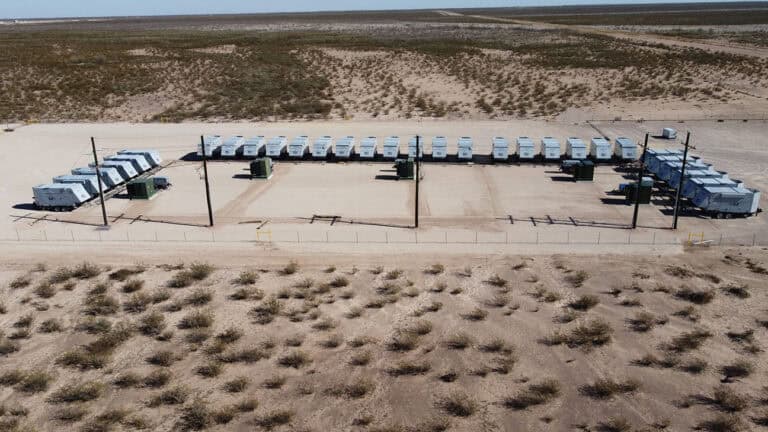

PowerYard Platform

Reading Time: 2 minutesTransforming Generators into Orchestrated Power Plants Individual generators, no matter how well-designed, are only as effective as the systems that integrate them into a coherent power solution. Mesa’s PowerYard platform provides the electrical, mechanical, and control infrastructure needed to transform multiple generator units into a single, orchestrated power plant that delivers reliable, high-quality electricity for mission-critical applications. The electrical integration begins with purpose-built paralleling switchgear that manages the complex process of synchronizing multiple generators and coordinating their power output. This switchgear incorporates sophisticated protection systems that can isolate individual units for maintenance while keeping the rest of the system operating normally. Load sharing algorithms ensure that each generator operates within its optimal efficiency range while maintaining reserves for contingency response and load variations. From a mechanical integration perspective, the PowerYard platform provides standardized interfaces for fuel supply, cooling systems, and exhaust handling that simplify both initial installation and ongoing maintenance. Quick-disconnect couplings allow individual generators to be removed for major service without disrupting the operation of adjacent units, minimizing system downtime and reducing maintenance costs. This modularity enables maintenance to

Technology and Design Philosophy

Reading Time: 2 minutesPurpose-Built Power for Mission-Critical Applications At the heart of Mesa’s offering is a carefully engineered family of reciprocating internal combustion engine (RICE) generators that have been optimized for the specific demands of modern digital infrastructure. These aren’t simply industrial engines adapted for stationary power generation—they represent a purpose-built solution designed from the ground up to deliver the performance characteristics that mission-critical applications require. The generator portfolio spans from 70 kW units suitable for smaller edge computing facilities to 350+ kW units capable of serving major enterprise installations. This range provides the building blocks needed to construct power systems ranging from hundreds of kilowatts to hundreds of megawatts, with the flexibility to precisely match capacity to actual requirements without over-investment in stranded capacity. Each generator unit incorporates dual-fuel capability, allowing operation on either natural gas or propane. This flexibility provides several important operational advantages. Natural gas offers lower operating costs and reduced on-site fuel storage requirements where pipeline connections are available. Propane provides energy security and deployment flexibility, particularly important for sites where natural gas infrastructure is limited or where backup

Renewable Integration

Reading Time: 2 minutesEnabling Clean Energy Through Fast-Response Power The integration of renewable energy sources represents both a sustainability imperative and a significant operational challenge for modern power systems. Mesa Power Solutions has developed technologies and operational strategies that enable seamless renewable integration while maintaining the reliability and power quality that mission-critical applications require. The fundamental challenge with renewable energy is variability. Solar panels produce power only when the sun shines, and wind turbines generate electricity only when wind speeds are adequate. This variability creates power quality concerns and reliability challenges that must be carefully managed. Mesa generators provide the ideal complement to renewable energy sources because of their ability to rapidly adjust output in response to changing conditions. When solar panels are producing at peak capacity, Mesa generators can reduce their output to minimum levels or shut down entirely, allowing clean energy to serve the electrical load. When clouds pass over the solar installation or wind speeds drop, Mesa generators can quickly ramp up within seconds to maintain consistent power delivery. This dynamic response capability enables operators to maximize their utilization of

Distributed Resilience

Reading Time: 2 minutesRedefining Power Reliability Through Swarm Architecture Mesa Power Solutions has pioneered a fundamentally different approach to power system reliability through our distributed resilience model. Rather than depending on one or two large generators that create single points of failure, Mesa deploys many mid-scale, independent generator units that work together as a coordinated fleet. This “swarm” approach transforms reliability from a matter of heroic engineering into a matter of probability and statistics. The mathematics behind distributed resilience is compelling. When a single 10 MW generator fails, the entire 10 MW capacity disappears instantly. However, if one unit fails in a system of twenty 500 kW generators, only 2.5% of total capacity is lost, which is very well within the system’s reserve margin. For high-quality industrial generators with proper maintenance, individual unit availability might be modeled at approximately 99%.  When multiple independent generators share the load with proper reserve margins and N+X design principles, system reliability can be dramatically higher than the reliability of any individual component.  This is the same principle that makes distributed computing clusters more reliable than single large

Login Options