We don’t give much thought to vehicle emissions anymore. They are like Netflix, most of us don’t even know that we have them until the bill comes. Depending on where you live, vehicle emissions might be more of a reality for you. For unknown reasons, I tend to drive older vehicles, the kind with crank windows and doors that you need to unlock with an actual key. I wonder how many people out there have never unlocked their vehicle that way?
As a result of my propensity for unreliable vehicles, emissions test time is a hit or miss prospect for me. Much like English class, I always wonder if I am going to pass this time around.
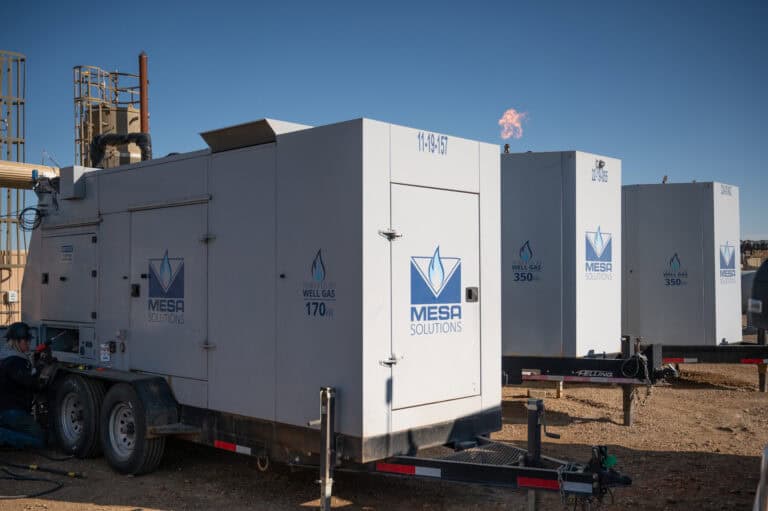
Like my junker vehicles, natural gas generators are not exempt from emissions standards. Federal emissions standards must apply – just like they do on my old Jeep. Public response to emissions testing and emissions regulations in general are, like anything these days, divided. Regardless, state and federal governments require engines of all configurations to conform to emissions standards during use. Like it or not, this even includes generators operating remotely in the middle of nowhere. Compliance isn’t optional: it’s mandatory.
The GV22PU Journey
At Mesa Power Solutions we’ve been building natural gas generators for the last 12 years. The engines we used were plug and play: drop them in and fire them up, done. A few years ago, to enrich our supply chain and keep the quality control closer to home, we partnered with HD Construction Equipment (formerly HDI) to distribute and develop a new line of engines, beginning with the GV22PU.
The plan was simple: HDCE would make the long block, and we would take care of the rest. Easy right? Well, yes and no. When developing any new product there are challenges and the GV22PU was no exception. Months of testing, days of adjusting, and many hours of running in the field produced an engine that performed exceptionally well for natural gas generator applications.
After the initial design and testing came a period of working out the bugs. Modern engines aren’t like your small block 350 with a distributor ignition and a four-barrel carburetor; everything is controlled by a computer. When dealing with any computer controlled, mechanical system, a painstaking calibration process must happen. The engines are hooked up to an array of equipment, and calibration engineers actively adjust settings while the engine is operating in a variety of conditions.
Enter The EPA
After all the testing and data collection the engine is ready to unleash upon the world, but one final hurdle remains: EPA Certification.
To run an engine anywhere in the United States, it must have a current EPA certification. (Yes, even Texas.) This certification is directly related to the conditions in which the engine will run. For example, the new Mesa engine secretly (shhhhh!) being developed, the GX12, is small enough to fit in a front-end loader. However, it was designed solely for power generation applications. No matter what the end user will use it for, the only certified application is stationary power generation. Any other use is neither legal nor practical. The same goes for our GV22PU engine.
EPA certification is a web of paperwork, submissions, and verifications. After testing is completed, Mesa must submit a large amount of documentation to the Environmental Protection Agency. This includes various manuals, testing materials, specifications, and legal documents. If everything is in order, we will get a certificate indicating our engines are certified for the specific application submitted.
Fun Facts About EPA Certification
- Once you are officially certified, the EPA can request an engine at any time from the assembly line for independent testing.
- The certification engine is to be kept in the exact same configuration as it was during testing. These engines are generally referred to as the “golden engine.”
- All engines produced must maintain the same emissions-related components as on the certification engine. No components can be added or removed after certification. This is a fun one because if any major changes are made, the engine must go through EPA testing all over again.
- Annual recertification is basically paperwork and the application of a new emissions number.
- Each engine comes with a plaque indicating the year it was manufactured and the emissions number. Each year the paperwork with the engine should reflect this change from year to year.
- Each certification requires installation instructions for all emissions related components.
Mesa EPA Certified Low Emission Engines
EPA certification comes in many different configurations, depending on the application for the final product. What I have outlined here is not going to be accurate for all situations and is generally for entertainment purposes.
Mesa Power Solutions currently has two natural gas engines with full certification and as I write this, we are actively working on a third which should be done before the end of the year. Exciting stuff! If you would like any details, feel free to reach out to our engine team and we can explain why Mesa engines are the ideal for power generation. (Maybe ask about our brand new GX12 currently in development – but don’t tell them I told you.)
If you are looking to build a generator and need a natural gas engine, we have what you need. If you are looking for an engine for your bulldozer, I might know a guy.
If your needs include an engine for power generation, we have the perfect solution. If you need a whole generator and don’t want to build your own, we have that also. (It’s cool we don’t judge.)
We appreciate you stopping by and taking the time to spend a few minutes of your day with us. And if you pass a broken-down Jeep on out on the road, give me a wave as you drive by!