
Microgrid Controllers: Functions and Benefits
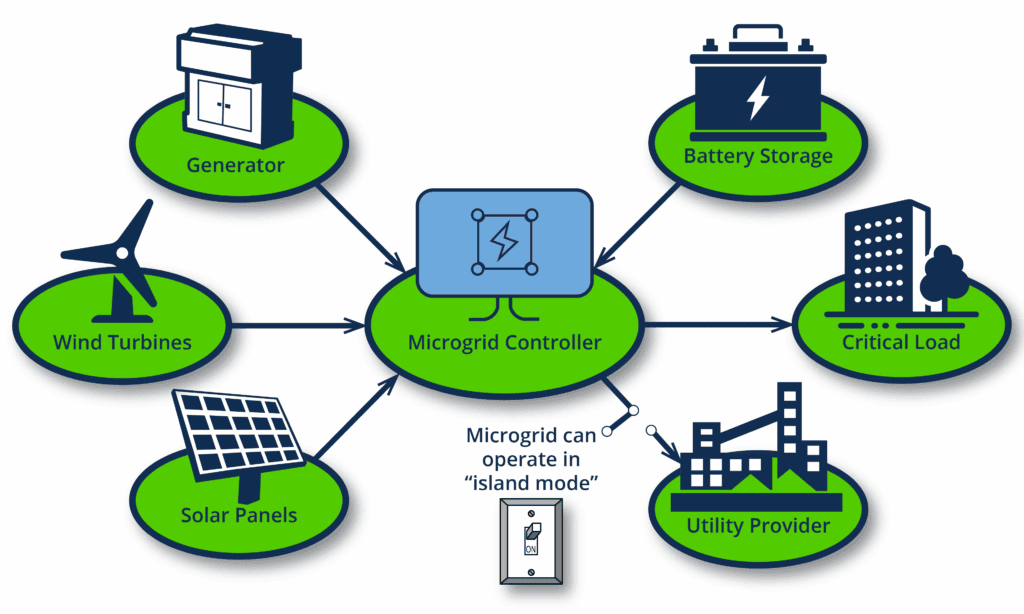
Reading Time: 3 minutesAs interest in power reliability and renewable energy management continues to grow, the subject of “microgrids” continues to gain consideration. It’s also important to understand how microgrid controllers play a role in this space. Microgrids are decentralized power systems that consist of distributed energy resources (DERs) such as renewable energy sources, energy storage systems, and conventional generators. Microgrid controllers are systems that enable the effective coordination of microgrid components such as renewable energy sources, energy storage systems, and loads. Microgrid controllers play an important role in managing the distribution of energy within a microgrid by ensuring optimal use of available resources, minimizing energy losses, and reducing operating costs. Below, we will explore the functions of microgrid controllers and the benefits they offer. Functions of Microgrid Controllers Microgrid controllers are designed to enable effective coordination of microgrid components, and they do this by performing several functions. One of the primary functions of a microgrid controller is to manage the distribution of energy within the microgrid. The controller ensures that the available energy resources are used optimally and that energy losses are