

Category

Microgrids

Road Closed sign posted on Mt Hamilton road due to snow, South San Francisco Bay Area, California; snow visible on the summit in the background

Overcoming Microgrid Selection Barriers: Three Roadblocks to Consider

Reading Time: 4 minutesMicrogrids have proved to be a reliable and sustainable way to provide energy to communities, businesses, and institutions in recent years, However the process of selecting the appropriate microgrid solution for a given location can be complex and challenging. Three significant roadblocks typically arise when decisions are made about whether to build (and pay for) a microgrid. Two or three of these roadblocks are often present, but any of them can stop the decision-making process. Roadblock 1: Determining the desired application for a given location Stated simply, what are we going to do and why are we going to do it? Answering these questions can be difficult because there are numerous desirable goals to go after. Often, organizations have the desire to achieve multiple goals that require different approaches to accomplish. So, a solution may look inefficient at best or illusive at worst. An excellent method to cut through the clutter is to determine a location’s power load requirement and the time a standby solution must provide backup power in the event of a grid outage. For example, suppose a

A stock image of someone pointing at a data collection chart on an ipad.

Microgrid Controls: Communicating in Real-Time

Reading Time: 3 minutesWith the ever-evolving technological backdrop to society, people want instant feedback and access to information. We can monitor our front porch video feed from our cell phone while we are on a beach vacation, we can preheat the oven at our house before we leave the office, and we can start our cars in the bitter cold winter from the comfort and warmth of our homes. With the advancement of technology not slowing down, microgrids should have the functionality to communicate in real time. Below are three things a microgrid controller should be able to do: accept control commands, engage in site and wide area optimization, and report its own health.   Accept Control Commands Modern microgrid control systems have many features for managing the combined resources within their purview.  A good example of a feature grouping is the algorithms involved in the control of storage batteries.  Given some understanding of the future, such as tomorrow’s weather forecast or tomorrow’s power pricing, decisions must be made about when to charge and when to discharge the battery.  Many other control decisions have to be made

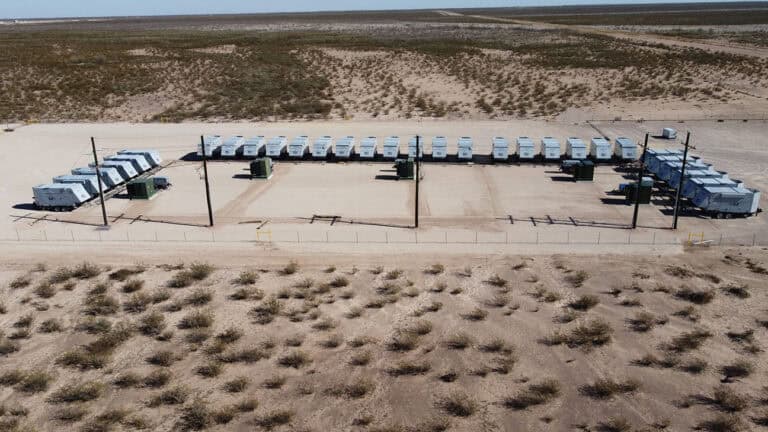
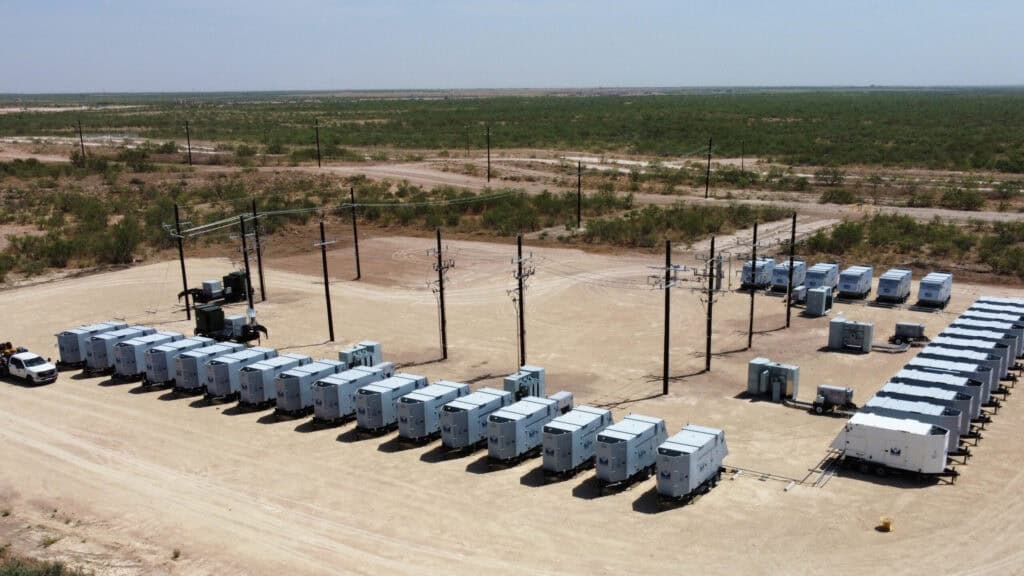
An aerial drone image of a natural gas generator microgrid to supplement the problems microgrids can solve.

Three Problems Microgrids Can Solve

Reading Time: 4 minutesUtilities face a variety of challenges in today’s business and technical environment.  While customers want lower prices, they also want greater reliability in general, and greater resilience at their specific location.  A utility leader recently characterized the customer side of the equation, saying “It used to be that customers could occasionally cope with going 48 hours without power.  Now, as soon as their cell phone battery goes dead, it’s a crisis for them.”  Large, corporate solutions to these issues are expensive and don’t always solve the problem right to the customer’s door.  On the other hand, microgrids and distributed power generation, can solve these problems and can do so comprehensively. Below are three problems that microgrids and distributed generation can solve. Problem #1: Low Power Generation from Utility Grid Historically, when a utility system became capacity “constrained,” the solution was to build bigger central station generators.  These installations were difficult to build in the past and even more so now. This is partly due to the risk of recovering such large investments in a constantly changing regulatory environment, and partly